Intro
Station 1 – Introduction to the Exhibition Tour
Station 1 – Introduction to the Exhibition Tour
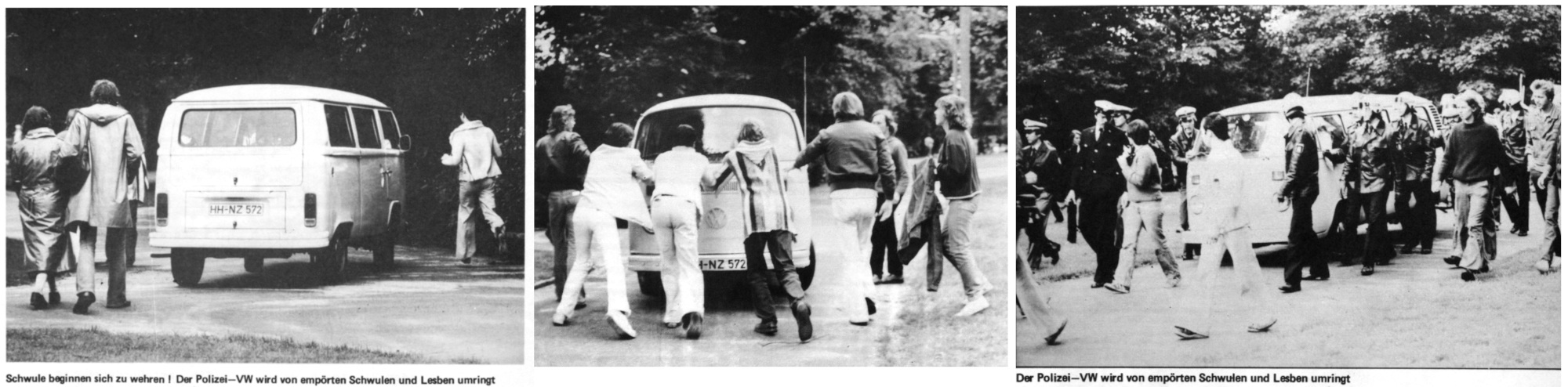
In this interview, eyewitness Kai Reinecke recounts the confrontation between the police and demonstrators in Schanzenpark following the “Stonewall” demonstration on June 28, 1980. So, the demonstration ended in Schanzenpark; it was damp and cold. We were all wearing parkas because it was damp and cold, and back then parkas were in style, even in the gay scene, in weather like that. And we didn’t know how we were supposed to have a picnic on that wet grass in Schanzenpark, and we just stood there somehow—I don’t even know if there was anything to eat for a picnic. I have no idea. I never really noticed—it probably got lost in the rain or the chaos, since it wasn’t exactly cozy either. And a lot of people had already left. And then people must have spotted that VW bus again; it was parked less than 40—well, I can’t say exactly—I’d say less than 40 meters from where we were all standing, and [those people] had approached Corny. Who did they approach? Corny. I don’t even know if he was one of the organizers of the demonstration; that could very well be the case. In any case, they asked him if he could get the films handed over. So, to go over to the bus, because he’d been taking photos throughout the demonstration. Then he went over there—as far as I could tell. I think I just caught that in passing at the beginning. Then the two police officers in the bus immediately rolled up the windows. Because of the rain, they didn’t want to take photos through the raindrops on the windows. They kept taking photos, though. And then they rolled up the windows, and in response to Corny’s polite—or not-so-polite, since he isn’t always polite—question about whether he could have the film, they rolled up the windows, didn’t respond, and kept taking photos. ...
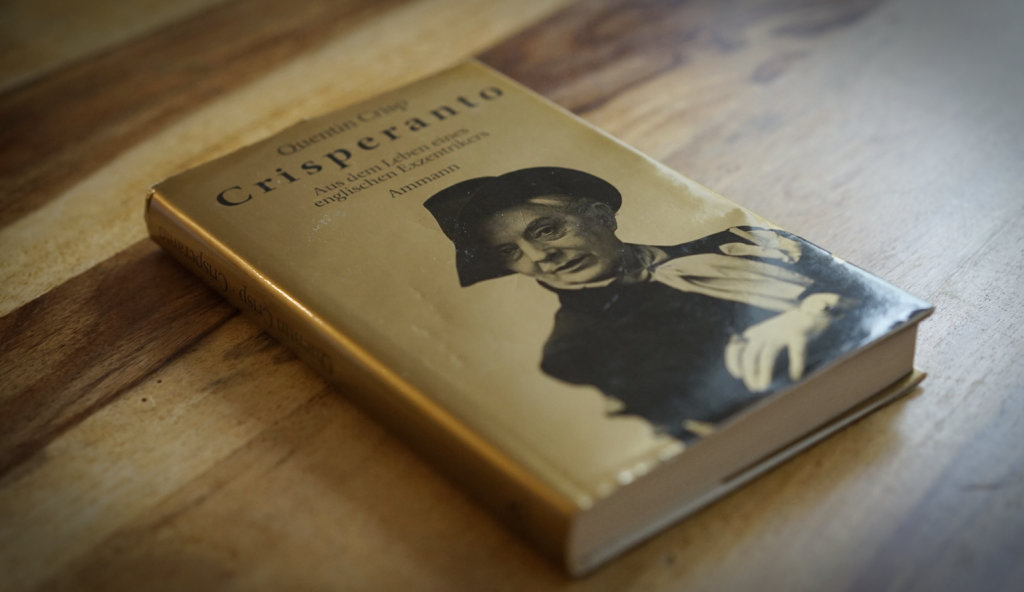
The British gay eccentric Quentin Crisp writes the following about police decoys in public restrooms in his 1968 book The Naked Civil Servant (translated into German in 1988 as Crisperanto): CW: racist stereotypes, the N-word The main area of operation for this particular strategy was the dimly lit public restrooms in the less densely populated areas of London. While a plainclothes detective paced back and forth across the street with watchful indifference, his accomplice—selected by superiors for his natural, job-appropriate physique—stood there at the urinal and “showed off”—he displayed his DIY apparatus to anyone who happened to walk in. (One cannot imagine what an equipment inspection—which would, after all, have to take place before every shift—would look like.) The trap worked well, and many of the most unbelievable people were lured to their doom in this manner. More recently, now that everyone is familiar with these maneuvers, they have fallen out of fashion. Common knowledge robs them of their effect. They also offend the sporting instinct of the British people. They are seen as a trick, like placing a diamond bracelet on the sidewalk and pouncing from ambush on anyone who bends down to pick it up. Almost exclusively, it was borderline cases that were caught. Those whose idea of a pleasant evening consisted of wandering from one “gentleman” to another quickly learned to recognize a cop even by touch. People who had never heard of homosexuality but whose natural curiosity was aroused by any manifestation of strange human behavior were put in such danger by these police techniques. Even if you had a good night, asking the officer what on earth he was doing there would certainly lead to arrest; if it was a bad night, a brief glance in his direction was enough. The worst consequence of the decoy system , however, was that for a police officer assigned to such a post who happened to have no sympathy for gay men, aversion quickly turned into the most savage hatred. Conversely, gay men who originally feared the police—which some might consider a good thing—now developed contempt for them. ...
Station 10 – Surveillance of Gay Venues by the Hamburg Police from 1960 to 1980
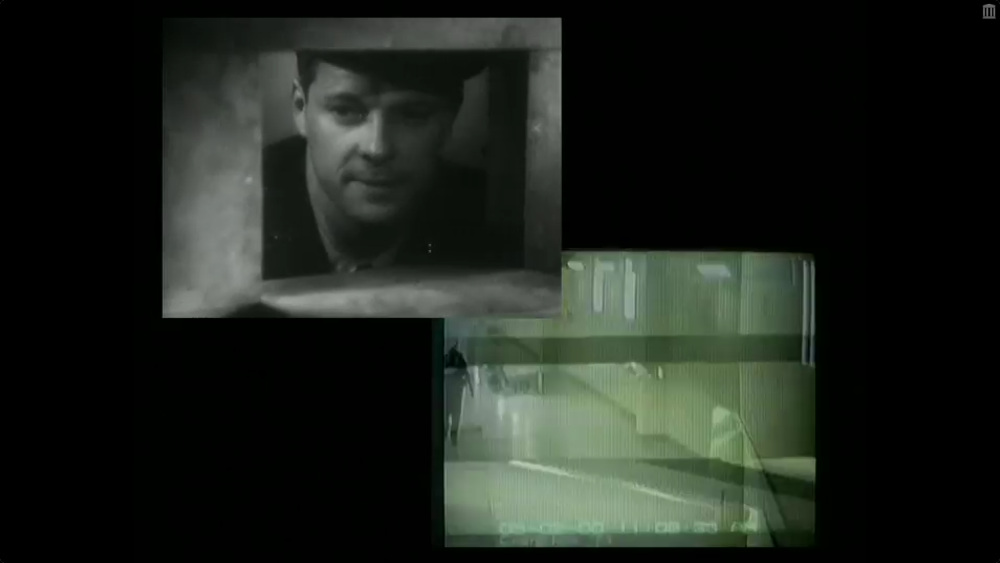
In the 2001 film »Gefängnisbilder« Harun Farocki shows excerpts from Jean Genet’s film “Un Chant d’Amour” (1950), in which a prison guard develops a voyeuristic fascination with the prisoners’ masturbation, “their love life.” The prison is a place of prohibitions, and thus of secrets and transgressions, at least those hoped for and fantasized about. – Harun Farocki, »Prison Images«, DE 2000, Min. 08:05 Filmmaker Farocki juxtaposes these excerpts with documentary footage from U.S. prisons, in which prisoners attempt to cover the transparent barred doors of their cells with their mattresses in order to create some semblance of privacy. These attempts are regularly and violently quashed with tear gas and physical force.
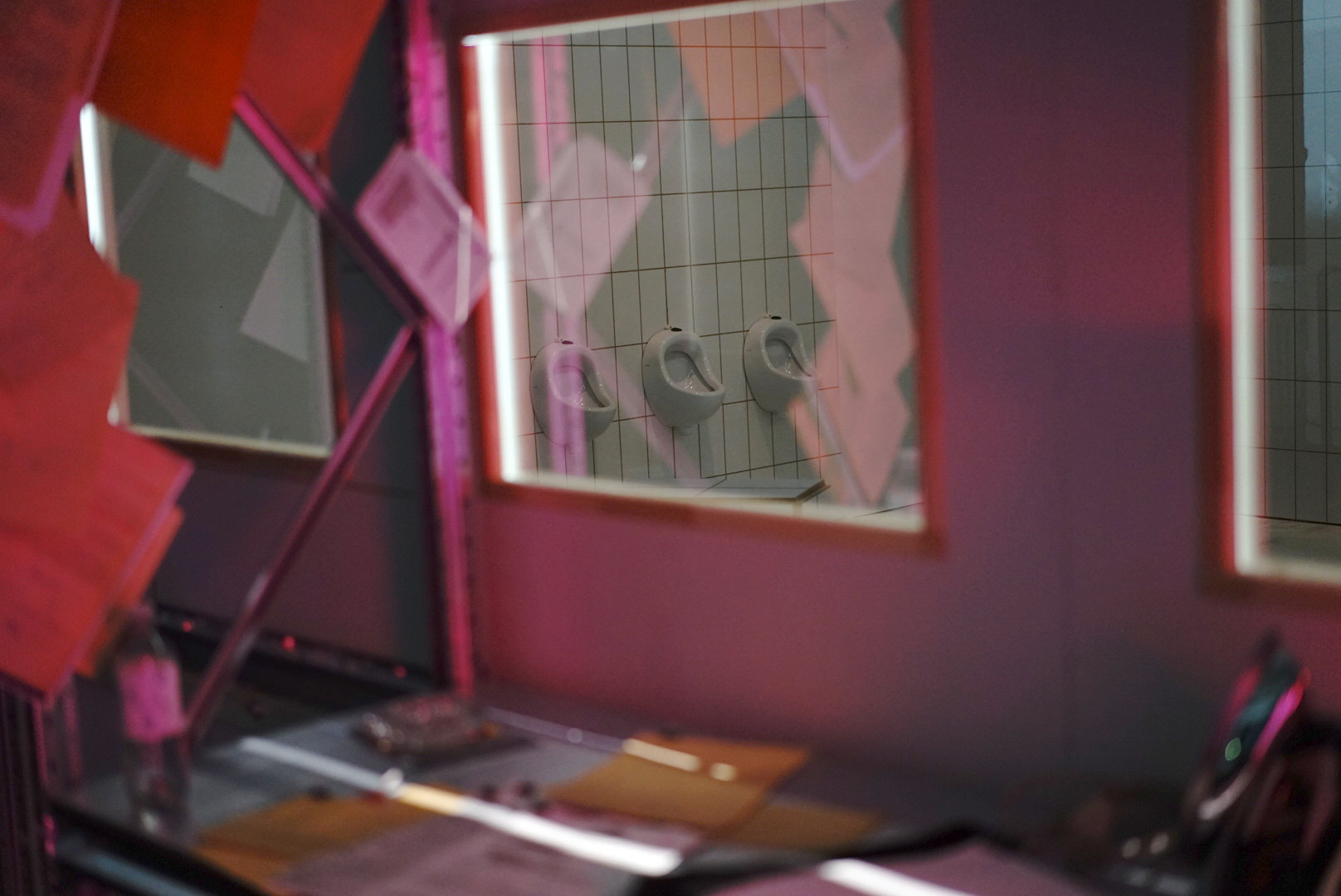
The title of the film “Tearoom” by filmmaker William E. Jones plays on the term tearoom —which in slang refers to a place for quick sex. In 1962, the police department of Mansfield, Ohio, shot an instructional video documenting their methods of prosecuting gay men. The door of a janitor’s closet in the public men’s restroom was fitted with a one-way mirror, allowing an officer to use a 16mm film camera to secretly monitor and film the men who met there for sex. The footage was subsequently used as evidence in court, resulting in all the accused men being found guilty and serving at least one year in prison. What is striking about the surviving recordings is that some faces have been burned out of the footage, rendering them unrecognizable. The artist suspects that these individuals may have been police officers who were covered by their colleagues. In 2008, William E. Jones released this educational film in its unedited form—as a radical example of using a film “as found”—thereby, on the one hand, making visible the police surveillance practices of the 1960s, while on the other hand highlighting the shift and, consequently, the mutability of the discourse over the past 50 years.