Voyeurism in Harun Farocki's 'Prison Pictures'

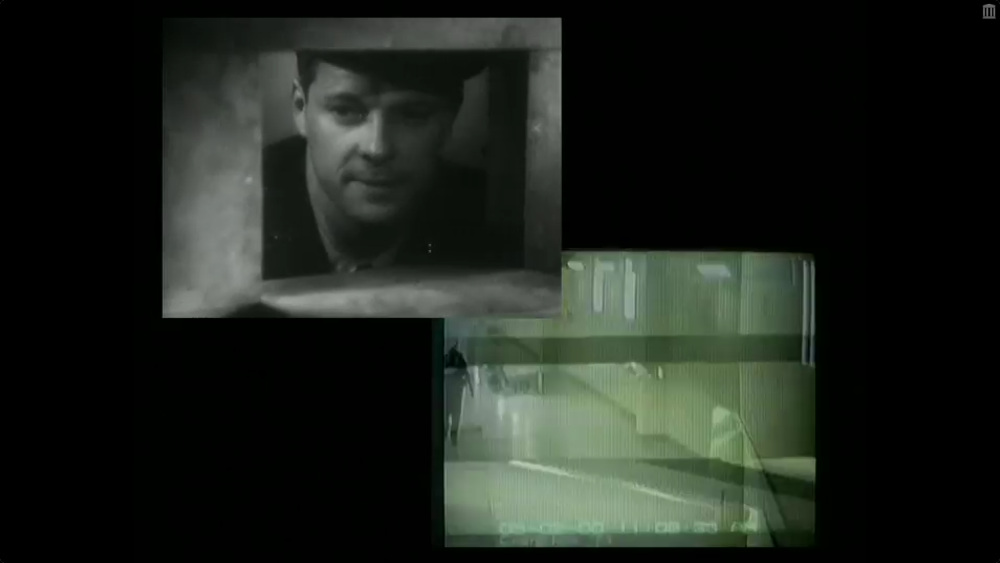
In the 2001 film »Gefängnisbilder« Harun Farocki shows excerpts from Jean Genet’s film “Un Chant d’Amour” (1950), in which a prison guard develops a voyeuristic fascination with the prisoners’ masturbation, “their love life.” The prison is a place of prohibitions, and thus of secrets and transgressions, at least those hoped for and fantasized about. – Harun Farocki, »Prison Images«, DE 2000, Min. 08:05 Filmmaker Farocki juxtaposes these excerpts with documentary footage from U.S. prisons, in which prisoners attempt to cover the transparent barred doors of their cells with their mattresses in order to create some semblance of privacy. These attempts are regularly and violently quashed with tear gas and physical force.

William E. Jones »Tearoom«

The title of the film “Tearoom” by filmmaker William E. Jones plays on the term tearoom —which in slang refers to a place for quick sex. In 1962, the police department of Mansfield, Ohio, shot an instructional video documenting their methods of prosecuting gay men. The door of a janitor’s closet in the public men’s restroom was fitted with a one-way mirror, allowing an officer to use a 16mm film camera to secretly monitor and film the men who met there for sex. The footage was subsequently used as evidence in court, resulting in all the accused men being found guilty and serving at least one year in prison. What is striking about the surviving recordings is that some faces have been burned out of the footage, rendering them unrecognizable. The artist suspects that these individuals may have been police officers who were covered by their colleagues. In 2008, William E. Jones released this educational film in its unedited form—as a radical example of using a film “as found”—thereby, on the one hand, making visible the police surveillance practices of the 1960s, while on the other hand highlighting the shift and, consequently, the mutability of the discourse over the past 50 years.

Felix Rexhausen's »Dienstlich Unterwegs«; (Männerschwarm)

In his anthology Die Märchenklappe, author Felix Rexhausen publishes the text “On Official Business,” in which he captures the thoughts of a fictional police officer assigned to observe homosexuals from the police box at Spielbudenplatz. In contrast to his disinterested colleague, he seems to have a voyeuristic curiosity about the “view of Pissburg” (p. 64): “It’s crazy boring here today. Sure, still better than running around outside in this weather or sitting in the patrol car. But otherwise, I kind of liked it better; I always enjoy coming here.” (p. 65) ...

January 1, 1982