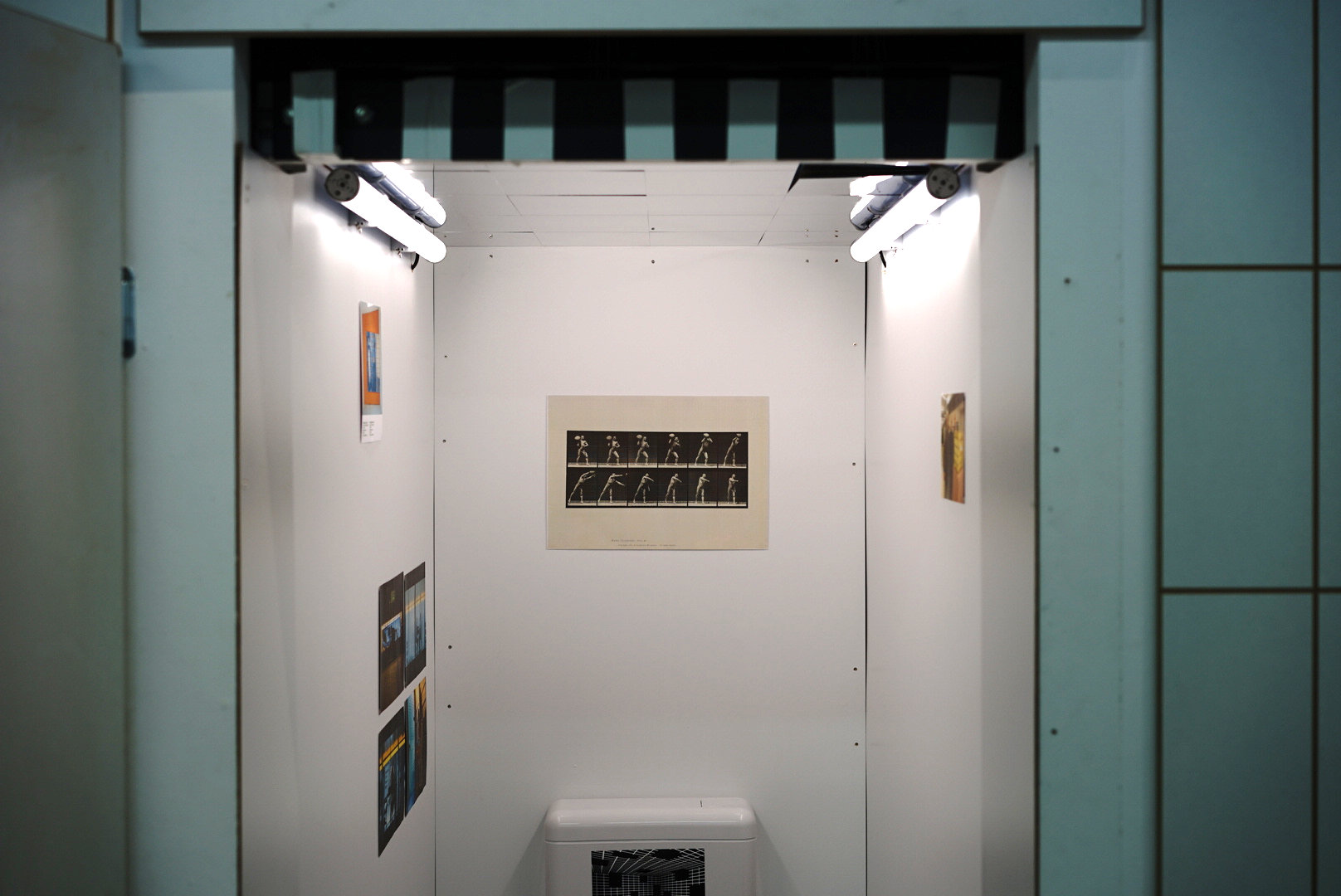
The “Hamburg Mirror Affair” action, which staged the smashing of surveillance mirrors, would be nothing without its aesthetic precursors and echoes. The influence of other images becomes extremely clear when we look at how sequential photography works against a grid-patterned background:
The sequential photographs of the individual phases of a galloping horse by the British-American photographer Eadweard Muybridge remain in our collective memory to this day, albeit more as an animated GIF. It’s hard to believe that they were published as early as 1878—100 years before the founding of Café TucTuc. Muybridge worked in California and published the photo book “The Human Figure in Motion, an Electro-Photographic Investigation of Consecutive Phases of Muscular Action” in 1901, featuring 87 photographic sequences of human movement that convey a forensic objectivity. Anyone who thinks of Leonardo da Vinci’s Vitruvian Man is not mistaken, as the aim here is also to create an ideal image: In the preface, Muybridge writes
“The great number of men were students or graduates […], each one of whom had a well-earned record in the field selected for illustration. […] they are reproduced without the slightest attempt being made to improve them; and are presented with all their faults, precisely as taken in the camera.” (“The great number of men were students or graduates […], each of whom had a well-earned distinction in the field selected for illustration. […] They are reproduced without the slightest attempt to improve them, and are presented with all their flaws, exactly as captured by the camera.”)
The method of measurement, however, is based less on the proportions of the body parts to one another and more on the relationship of the human being to their surroundings. The visual grid in the background makes the human’s movement measurable; their status as a representative is made possible only by the consistent, superficial order of the background. The measured human in Muybridge’s images, however, does not occur to rebel against the scale and throw his stone at the visual grid in the background. Doing so would cause him to leave his place within the regime of images and shake the foundation of his existence.
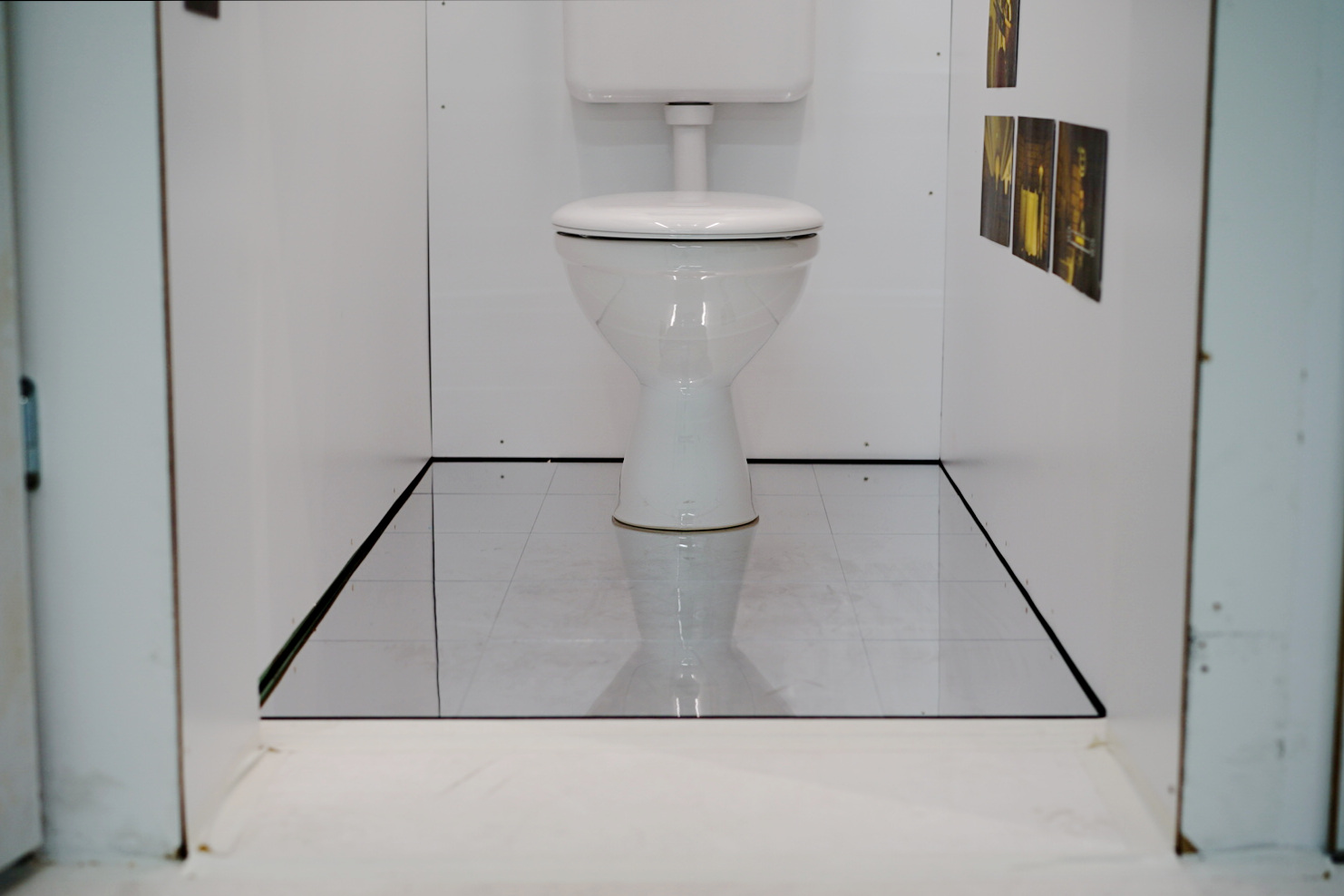
The toilet itself, too, is a subject of artistic exploration due to its significance for several generations of gay men and queer people, as demonstrated by works by Pjotr Nathan (“Das Versteck der Lust”) and Tony Just. The artist duo Dümadissima has erected a monument to the “hammer blow” itself in a diorama made from a mandarin orange crate titled “Pauline’s Hammer,” which is now on display at the Gay Museum in Berlin.